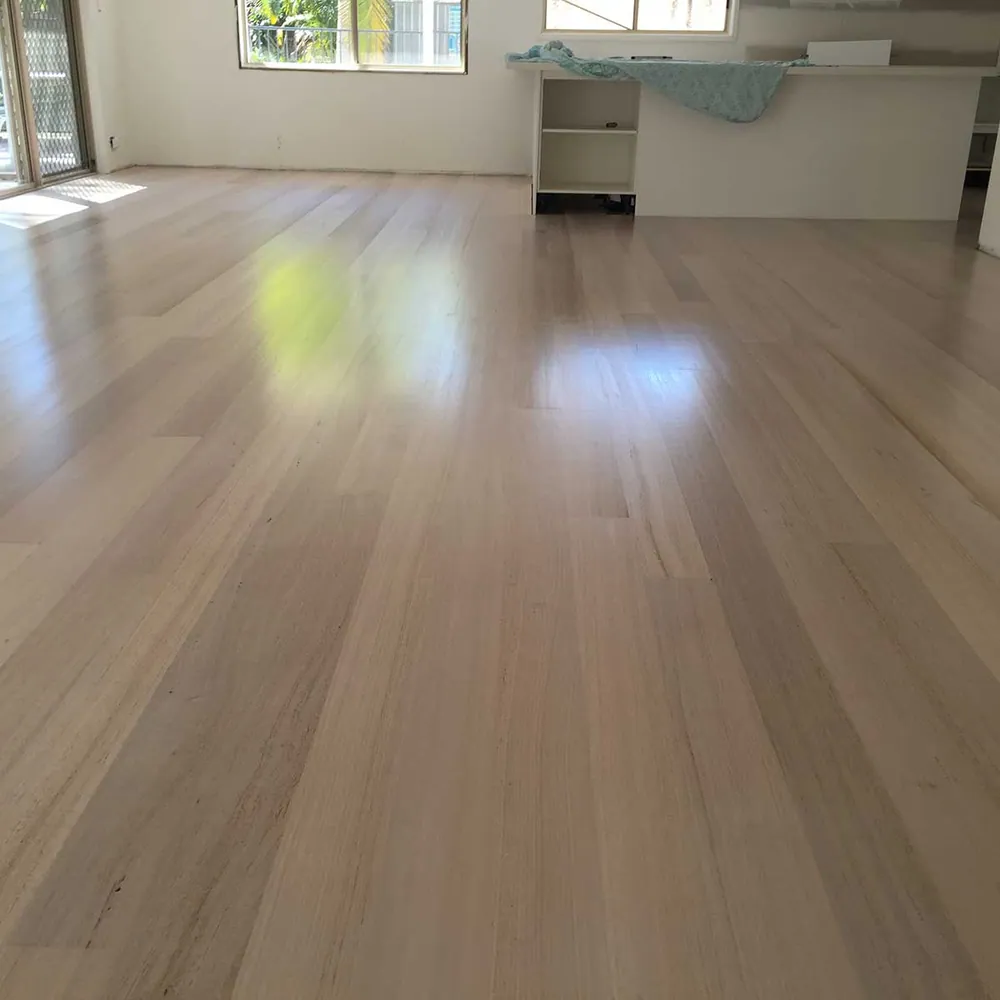
Pale, even and endlessly adaptable. Tasmanian oak takes colour better than almost any other Australian floor timber, which makes it the one we reach for when a client wants a specific look rather than a specific timber.
Tasmanian oak is a trade name covering three eucalypts, mountain ash, alpine ash and messmate, sold together because they look alike and mill alike. There is no oak in it. What it shares with real oak is the pale colour and the straight, open grain, which is why the name stuck.
It is moderately hard, a lot softer than spotted gum but tougher than cypress, and it sands to a very even pale straw-pink that is close to a blank canvas.
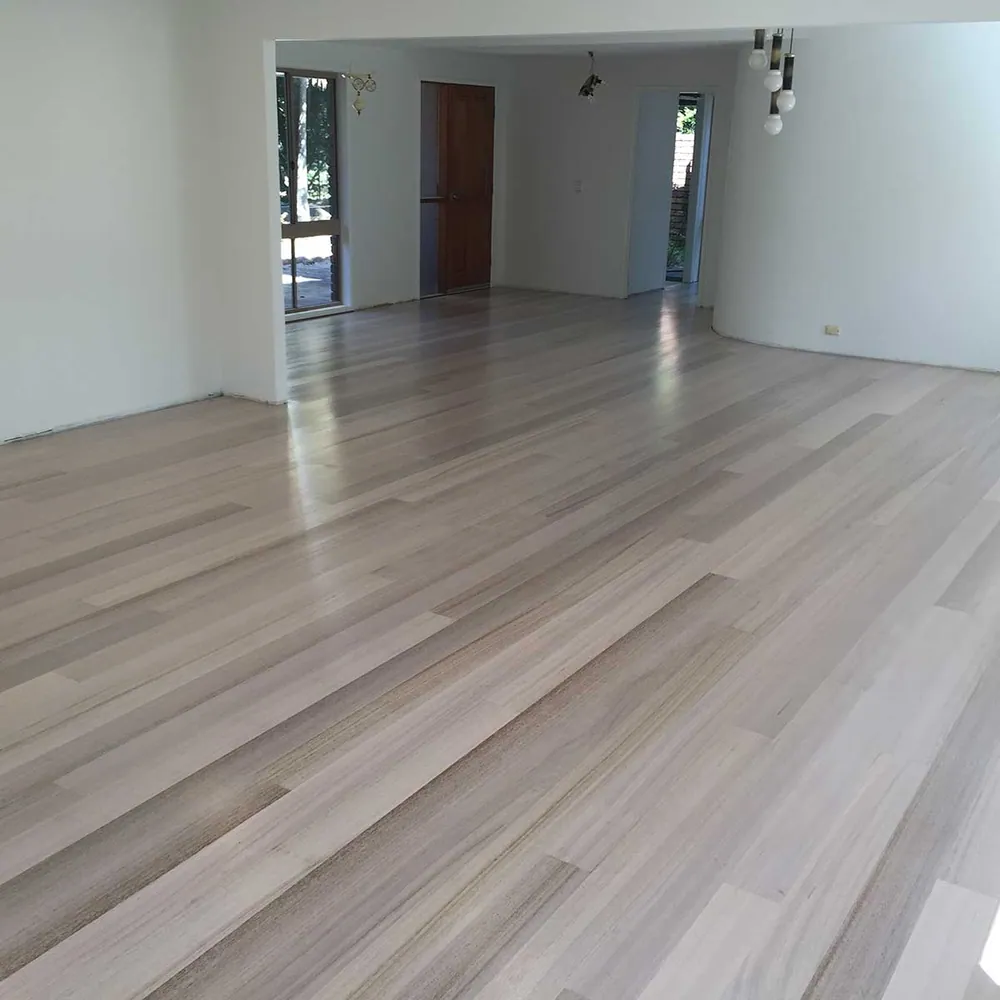
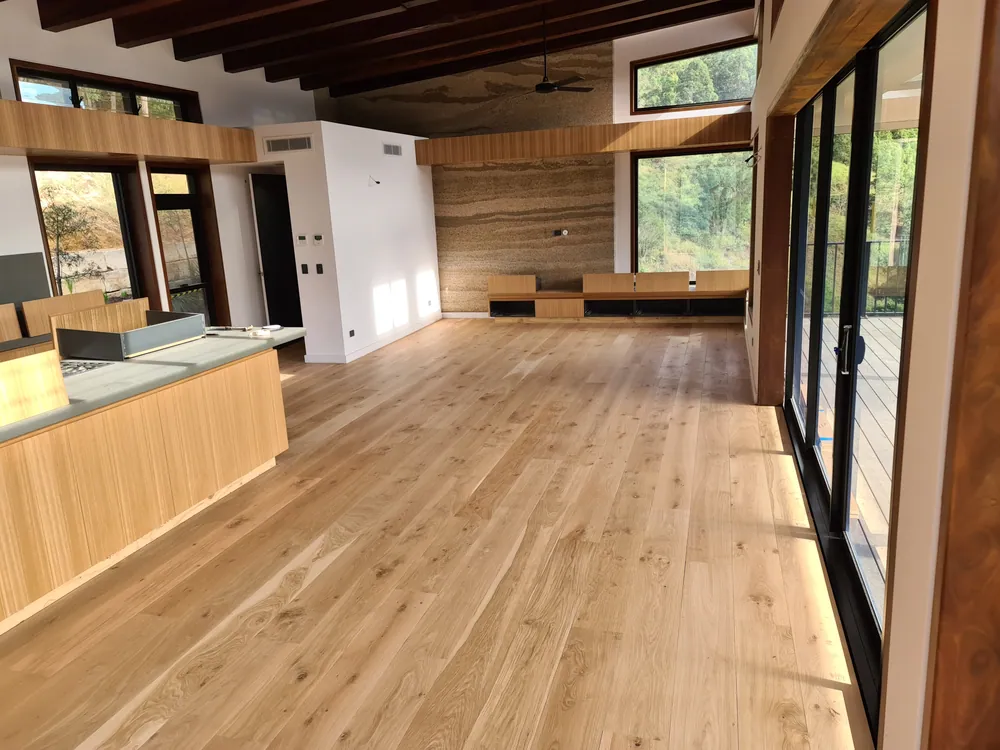
Because the base is pale and the grain is open and consistent, Tasmanian oak accepts limewash, whitewash, greys, natural tones and dark stains with less blotching than most species. If a client shows us a photograph of a floor colour they want, this is the timber most likely to reproduce it.
Limewash over wide-board Tasmanian oak is one of the most requested combinations on the Coast, and it is genuinely as good as the photographs. The white sits in the open grain and leaves a soft, cool, coastal floor.
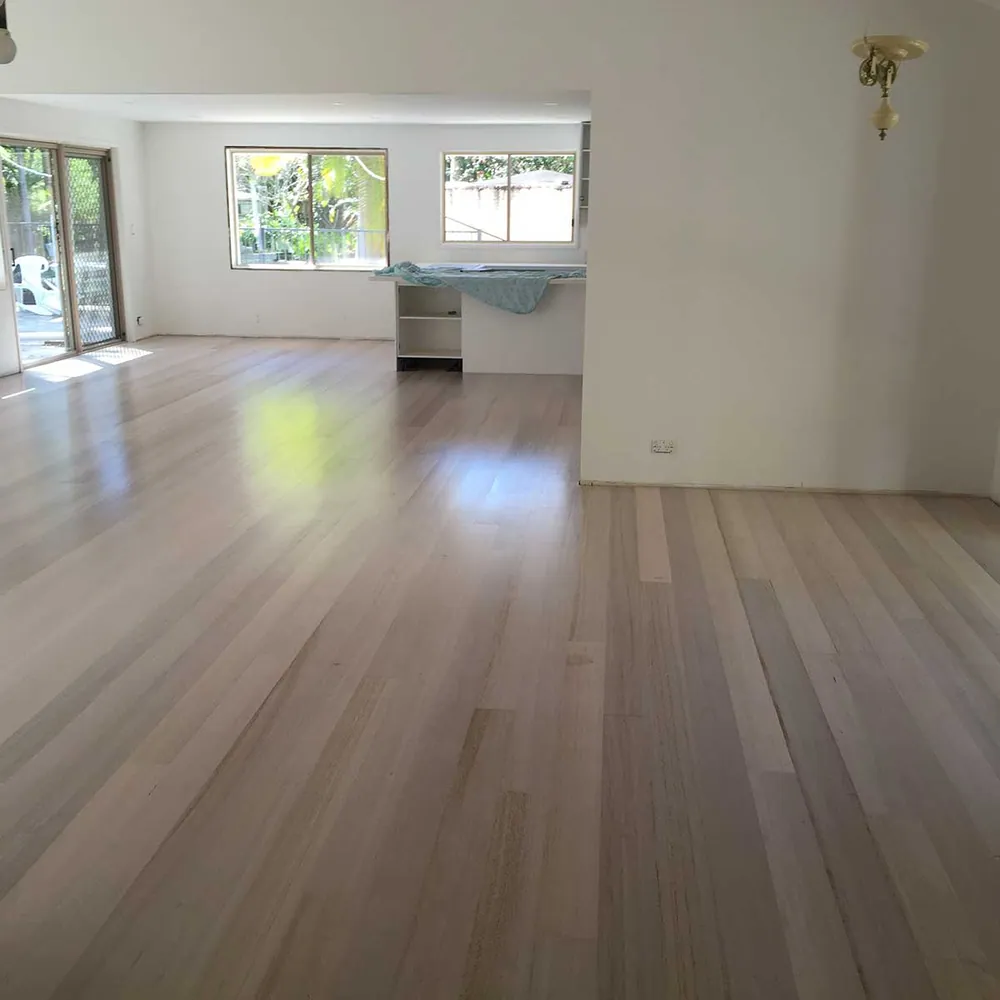
The three species mixed under the one name do not all take stain at exactly the same rate, and the softer early wood in any board drinks more. On a dark stain that can show up as blotching if the floor is not prepared right.
The answer is finishing the sand at a finer grit to close the surface, and using a conditioner or a wash coat before the colour goes on. On a light colour or a clear finish it is a non-issue.
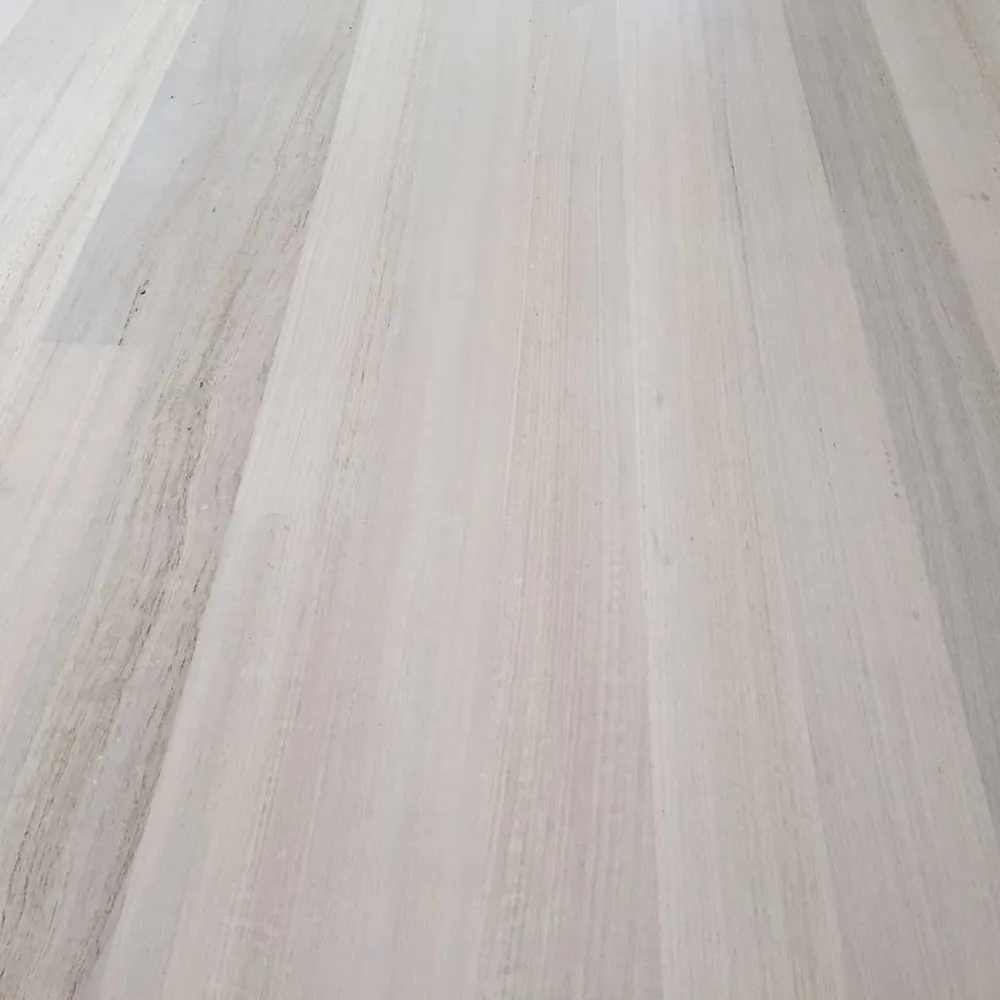
It dents more easily than the Queensland hardwoods, so felt pads under furniture matter and stiletto season is not kind to it. On the plus side it is easy to sand and it is a good candidate for an oil finish, which means damage can be spot repaired rather than resurfaced.
No. It is a trade name for three Australian eucalypts. It behaves differently from European or American oak, though it looks similar once finished.
It can if the floor is not prepared for it. Finishing the sand finer and using a conditioning coat first prevents it, and we sample on your floor either way.
It is fine for normal family use but it dents more readily than spotted gum or blackbutt. Felt pads and a doormat go a long way.
That is what the free in-home estimate is for. We will look at your timber, show you samples on it, and tell you honestly what will work.
Tell us about your floor and we will get back to you fast, usually the same day, to book a free in-home look and an honest price.
Local timber floor sanding, polishing and restoration across 97 suburbs - from the Logan line and the hinterland to the NSW Northern Rivers. View all areas we service
 Fine FinishedFloors
Floors worth showing off - cut back, stained and finished by Gold Coast specialists since 2010.
22 Springsure Drive,
Mudgeeraba QLD 4213
Monday to Saturday, 7am to 5pm
Servicing the Gold Coast, Logan fringe and Northern NSW to Ocean Shores. Free, no-obligation in-home estimates.