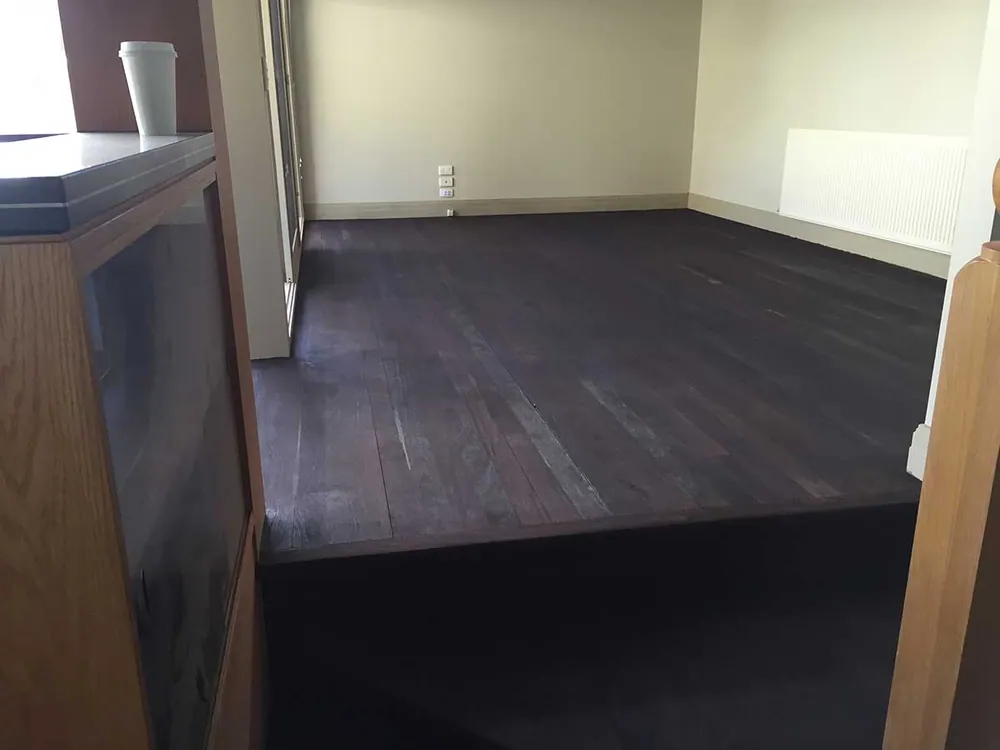
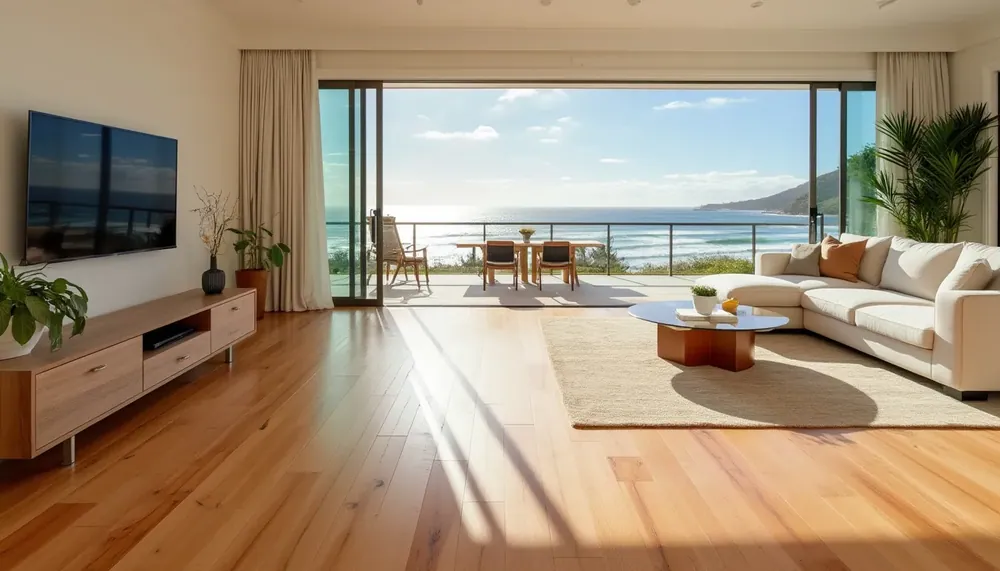
The cheapest way to completely change a room. A direct stain goes onto bare sanded timber and shifts the colour of the whole floor, then gets locked under a clear coat. What you cannot do is guess the result from a chart.
The floor is sanded to bare timber, finer than we would for a clear finish, because the grit you finish on controls how much stain the boards drink. Then the stain is applied and wiped back to an even depth of colour, working wet edge to wet edge so no lap marks are left across the room.
Once it is dry the colour is sealed under clear coats, normally water-based so the stain colour you chose is the colour you keep. The stain does the colour, the topcoat does the protection, and they are two separate decisions.
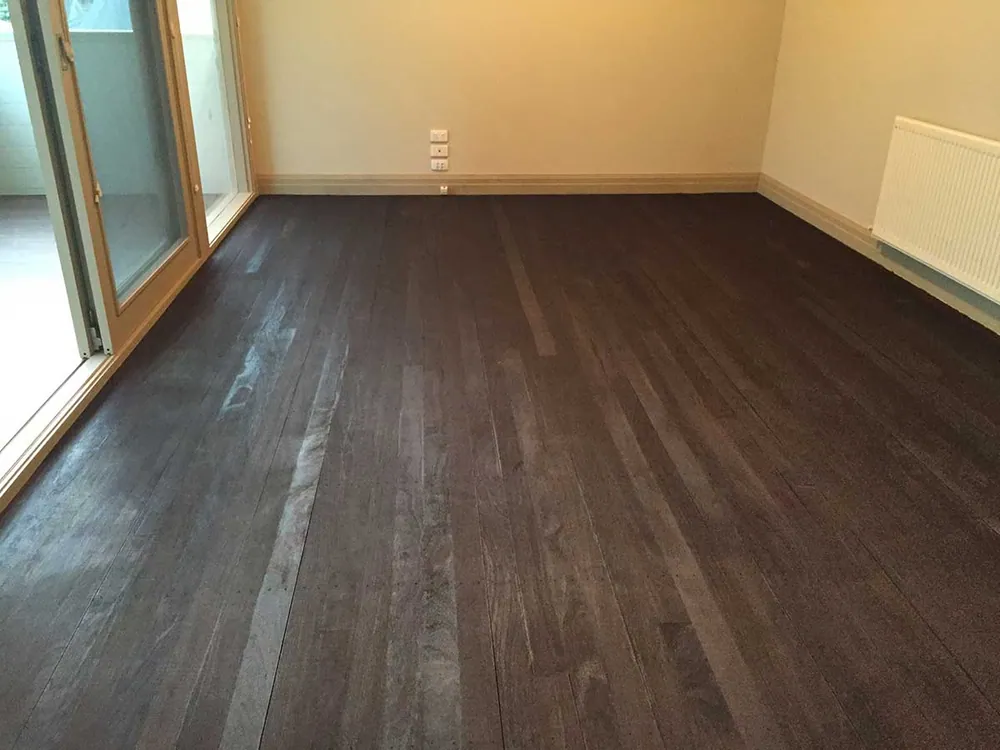
The same tin of stain looks like three different colours on Tasmanian oak, spotted gum and brushbox. Density, grain, tannin and the age of the timber all change the result. A colour chart, a Pinterest photo and a sample board from a supplier are all pictures of somebody else's timber.
So we sand a patch of your actual floor, put two or three candidate colours down on it, seal them, and you look at them in daylight and under your own lights before anything is committed. It costs an hour and it prevents the single most expensive mistake in this trade.
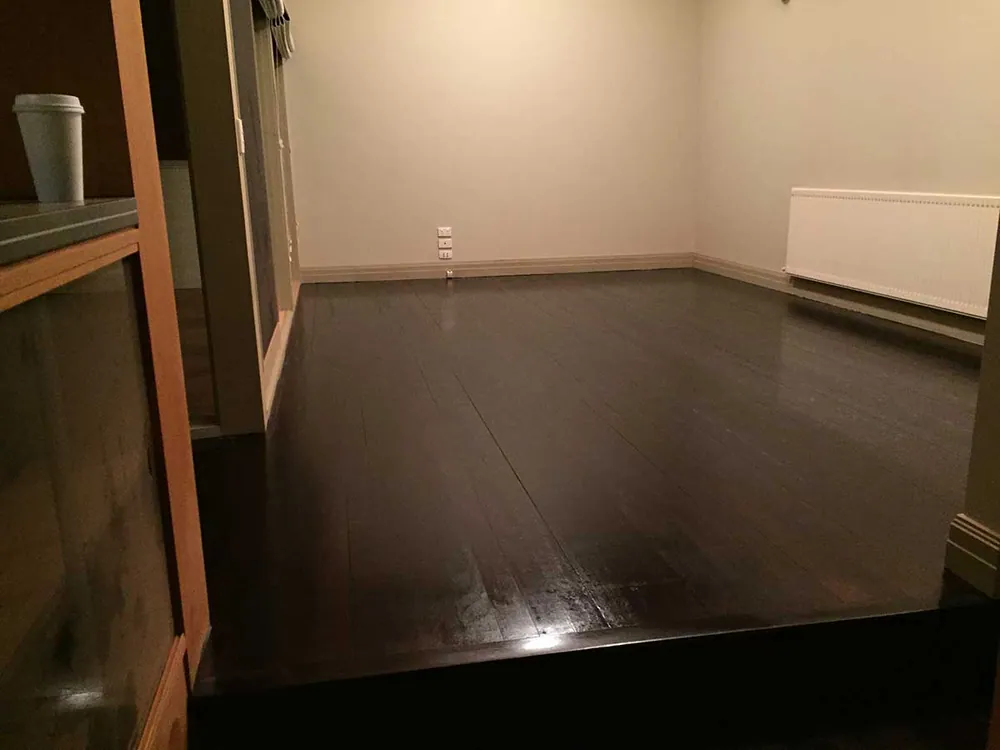
Teak brown and walnut, for warmth and to hide a floor that has patchy colour history. Black Japan and near-blacks for a dramatic contemporary look, usually on staircases. Greys, which are difficult and unforgiving but spectacular when they land. And light natural tones that mostly just even out a floor with mismatched boards.
Staining is also the standard fix when a floor has patched sections, an old extension in a different timber, or a hearth cut-out. A colour over the top unifies the room in a way a clear coat never will.
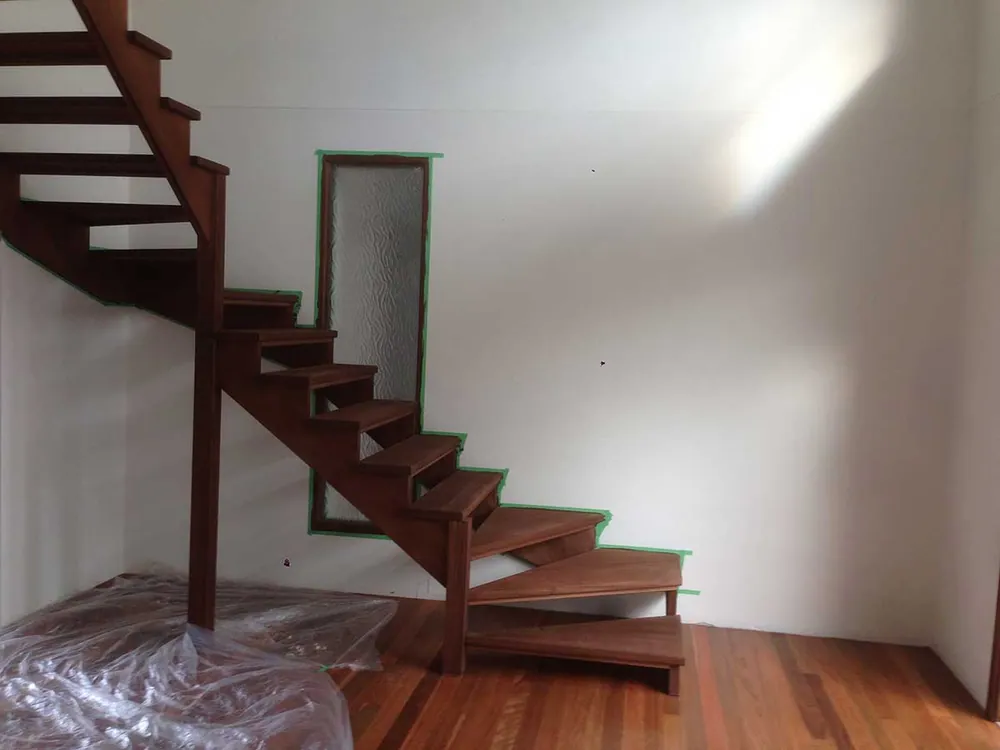
It will not hide deep gouges, cupping, or gaps between boards. It will not rescue a floor that is sanded down to the tongues. And going lighter than the natural timber is not possible with a stain: for that you need a limewash or a white pigment, which is a different process.
No. Stains only add colour. To lighten a floor you need it sanded back to bare timber and then a limewash or white pigment applied.
Not if it is sealed properly. The stain is under two or three clear coats. It is the clear coat that wears, and that can be screened and recoated without touching the colour.
We do them on site in about an hour, and we leave them down so you can look at them in morning and evening light before deciding.
That is what the free in-home estimate is for. We will look at your timber, show you samples on it, and tell you honestly what will work.
Tell us about your floor and we will get back to you fast, usually the same day, to book a free in-home look and an honest price.

Local timber floor sanding, polishing and restoration across 97 suburbs - from the Logan line and the hinterland to the NSW Northern Rivers. View all areas we service
 Fine FinishedFloors
Floors worth showing off - cut back, stained and finished by Gold Coast specialists since 2010.
22 Springsure Drive,
Mudgeeraba QLD 4213
Monday to Saturday, 7am to 5pm
Servicing the Gold Coast, Logan fringe and Northern NSW to Ocean Shores. Free, no-obligation in-home estimates.