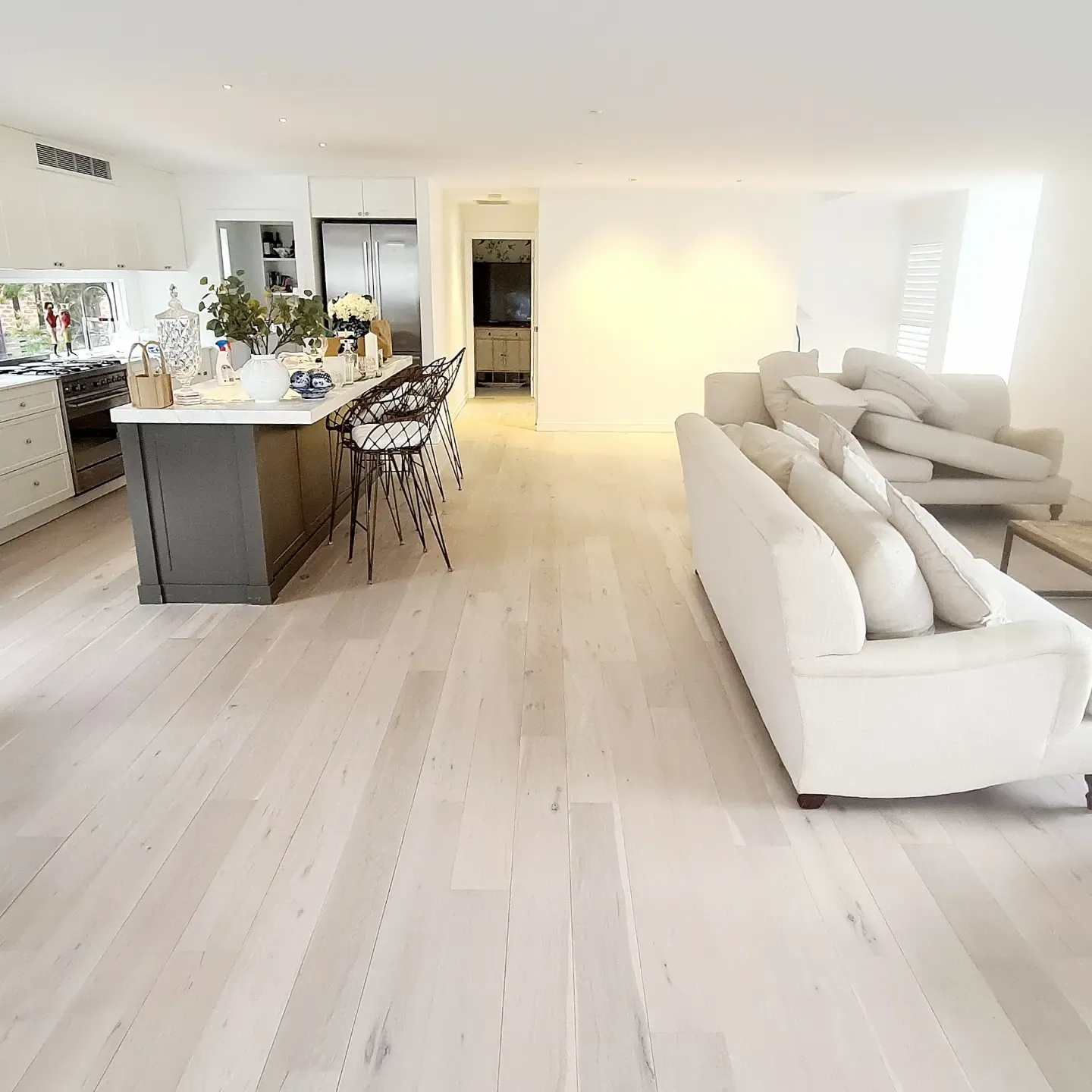
The coastal look, and the one we get asked for most on the Gold Coast. A white pigment worked into the grain lifts the whole floor several shades and cools the timber down. Getting it even is the skill.
A limewash is a white or off-white pigment carried in a liquid that is worked across the sanded boards and then wiped back. The pigment stays in the open grain and in the softer early wood, and comes off the dense surface. That contrast is the effect: the grain pattern reads white against a lighter, cooler version of the original timber.
It is not paint and it is not a stain. A stain colours the whole board evenly. A limewash deliberately sits unevenly, in the grain, which is why it looks like weathered coastal timber rather than a painted floor.
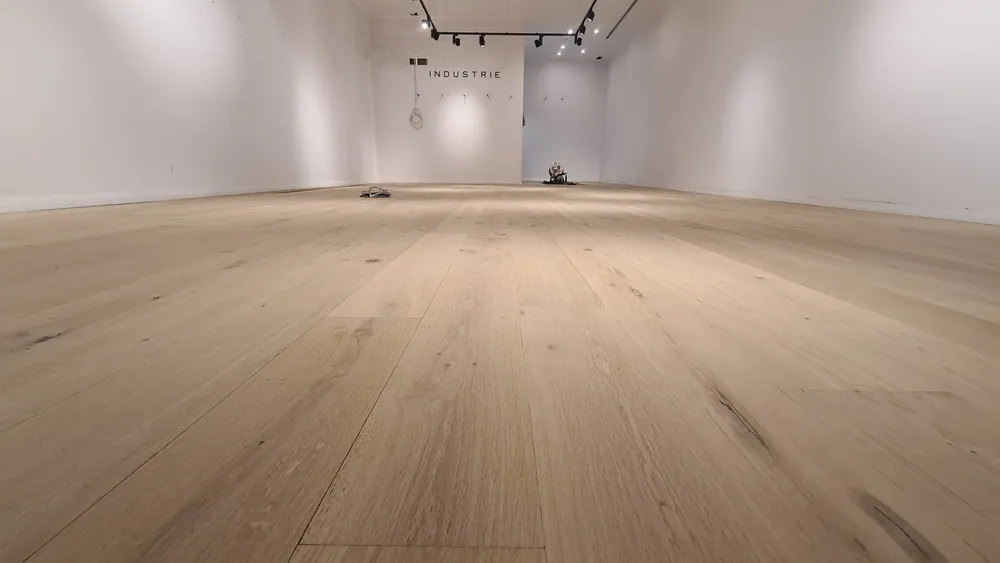
This is the part that goes wrong on other people's jobs. A limewash sealed under a solvent-based polyurethane will go yellow, and then keep going yellow, until in three years the floor is a dirty cream. Every limewash we do is sealed with a non-yellowing water-based coating, no exceptions.
The first coat also has to be applied without dragging the pigment around. Rolling a wet coat over fresh limewash can pull it out of the grain in streaks. It is a careful, unhurried first coat and then the build goes on normally.
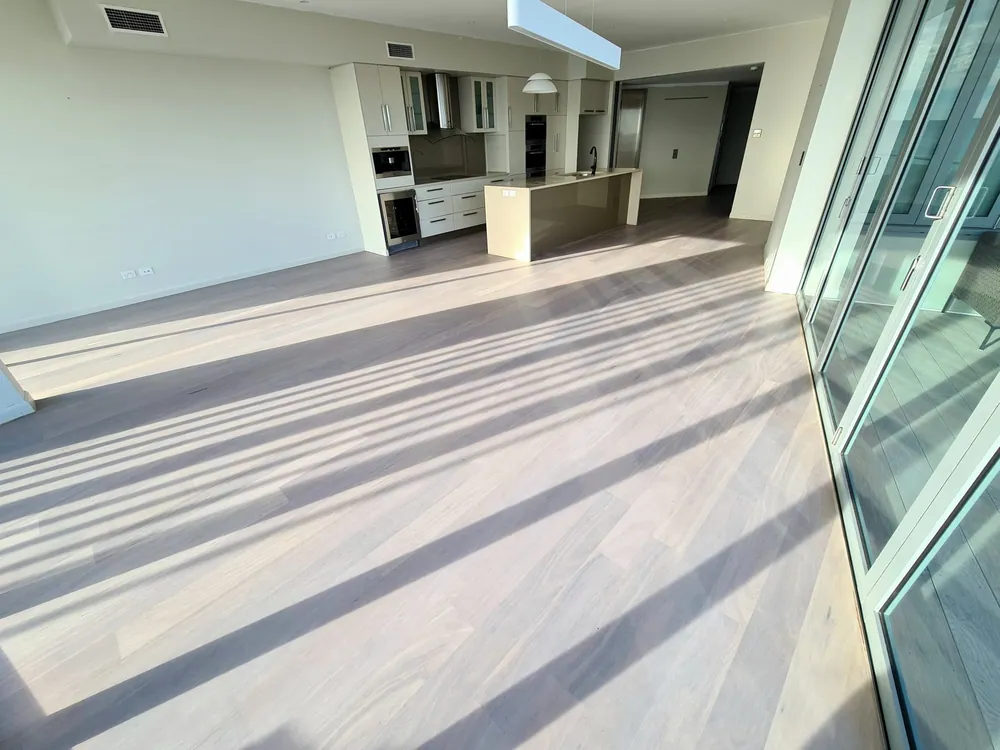
Tasmanian oak, American oak and European oak take limewash beautifully: open grain, pale base, plenty of contrast. Cypress pine is a favourite on the Coast and handles it well, though the knots stay dark and that is part of the character.
Spotted gum and blackbutt can be limewashed and look striking, but they start much darker and redder, so the result is a soft grey-brown rather than a true white. We always do a sample board on the actual floor before you commit, because photographs of other people's timber will mislead you.
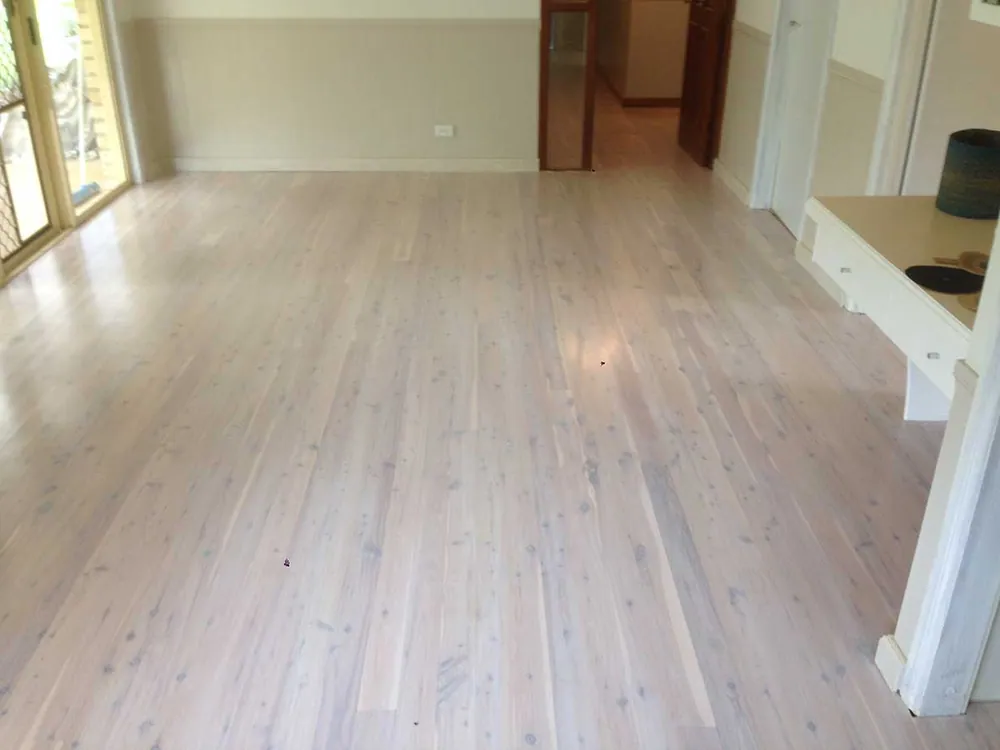
Pale floors hide dust and show hair. Dark floors do the opposite. A limewash is very forgiving of the fine sandy grit that comes into a Gold Coast house off the beach, which is a real practical advantage, but you will see the dog's fur.
Maintenance is the same as any water-based floor: vacuum, damp mop with a neutral cleaner, felt pads under furniture, and a screen and recoat when the sheen dulls in the walkways.
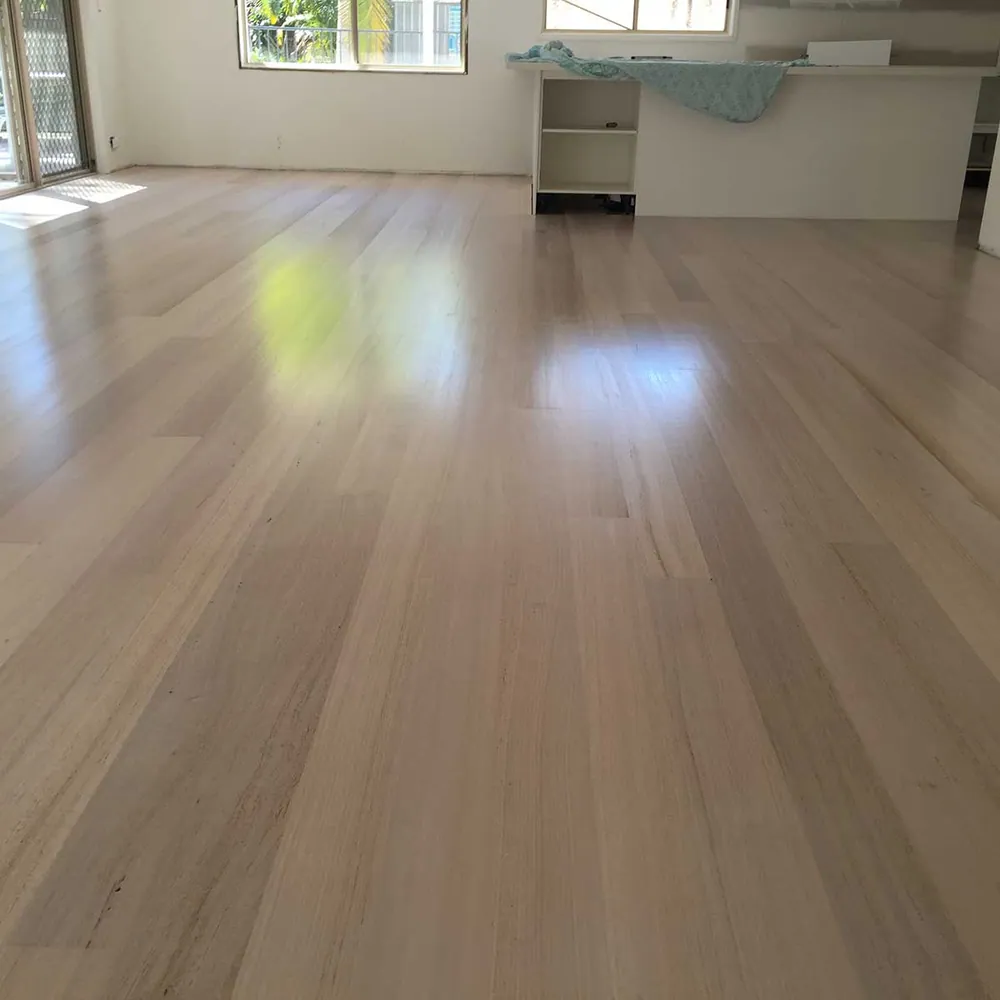
Not if it is sealed with a water-based coating. Yellowing is caused by a solvent-based polyurethane over the top, which we never do on a limewash.
Yes, and it can look superb, but it will read as a soft grey-brown rather than white because the timber underneath is dark and red. We will show you a sample on your own floor first.
If it sands back to clean bare timber, yes. Deeply penetrated old stain sometimes will not fully come out, and we will tell you before we start rather than after.
That is what the free in-home estimate is for. We will look at your timber, show you samples on it, and tell you honestly what will work.
Tell us about your floor and we will get back to you fast, usually the same day, to book a free in-home look and an honest price.
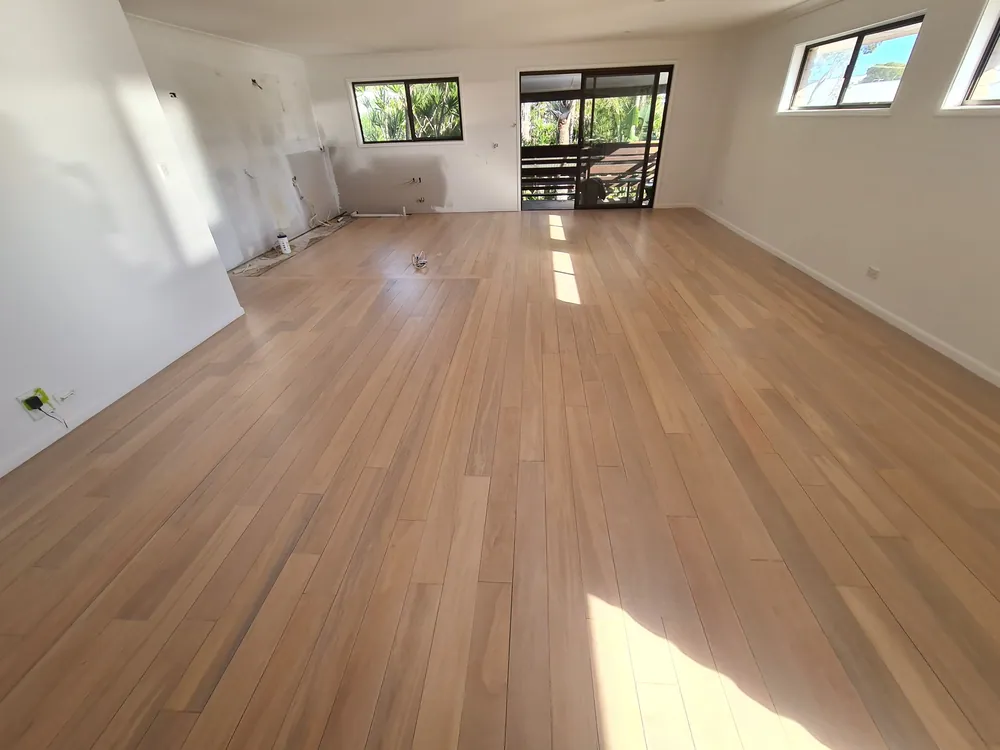

Local timber floor sanding, polishing and restoration across 97 suburbs - from the Logan line and the hinterland to the NSW Northern Rivers. View all areas we service
 Fine FinishedFloors
Floors worth showing off - cut back, stained and finished by Gold Coast specialists since 2010.
22 Springsure Drive,
Mudgeeraba QLD 4213
Monday to Saturday, 7am to 5pm
Servicing the Gold Coast, Logan fringe and Northern NSW to Ocean Shores. Free, no-obligation in-home estimates.