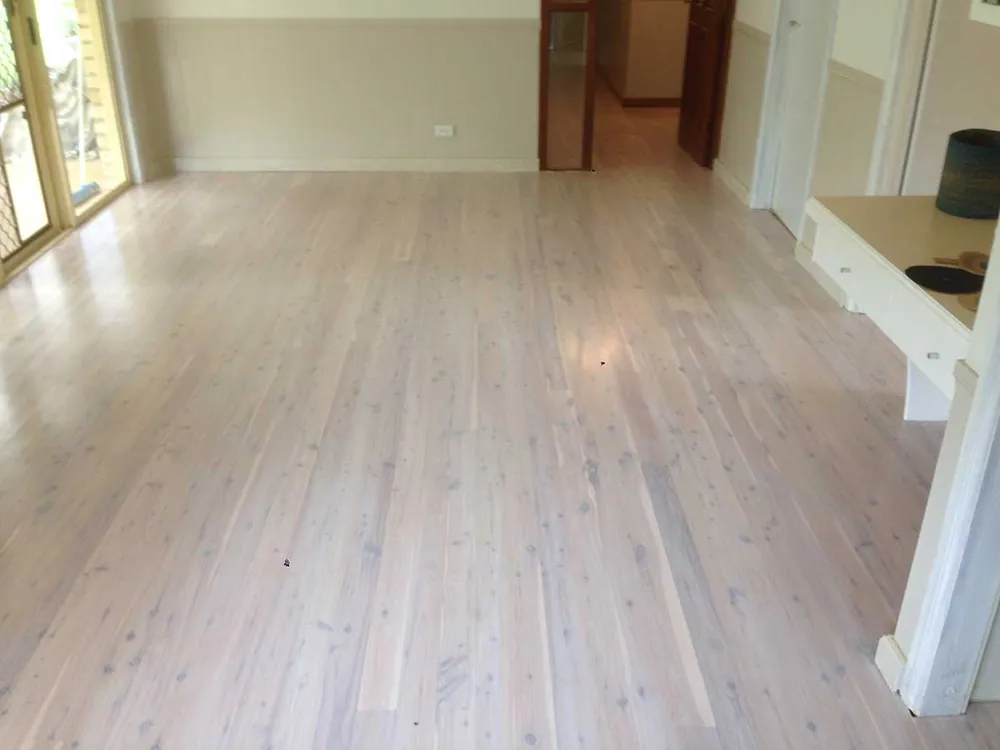
The floor under half the older houses on the Gold Coast. Cypress pine is honey-toned, full of dark knots, and it looks completely different depending on whether you lean into that character or tone it down.
Cypress is a softwood, considerably less dense than blackbutt or spotted gum, and it dents more readily. It is also naturally termite resistant, which is why so much of it went into Queensland houses in the first place, and it carries a distinctive resinous smell when it is cut.
Because it is soft, the sanding has to be lighter handed. Too aggressive and the machine will scallop the surface between the harder knots and the softer surrounding timber. Cypress rewards patience and finer grits.

Cypress pine is knotty, and the knots are much darker than the surrounding honey-coloured timber. Whether that reads as charming or busy is entirely personal. What you cannot do is remove them, so the decision is how to handle them.
A clear finish maximises the contrast and gives you the classic Queenslander look. A limewash cools the honey down towards grey-white while the knots stay dark, which is currently the most requested version and looks superb in a coastal renovation. A mid-brown stain narrows the contrast and calms the whole floor down.
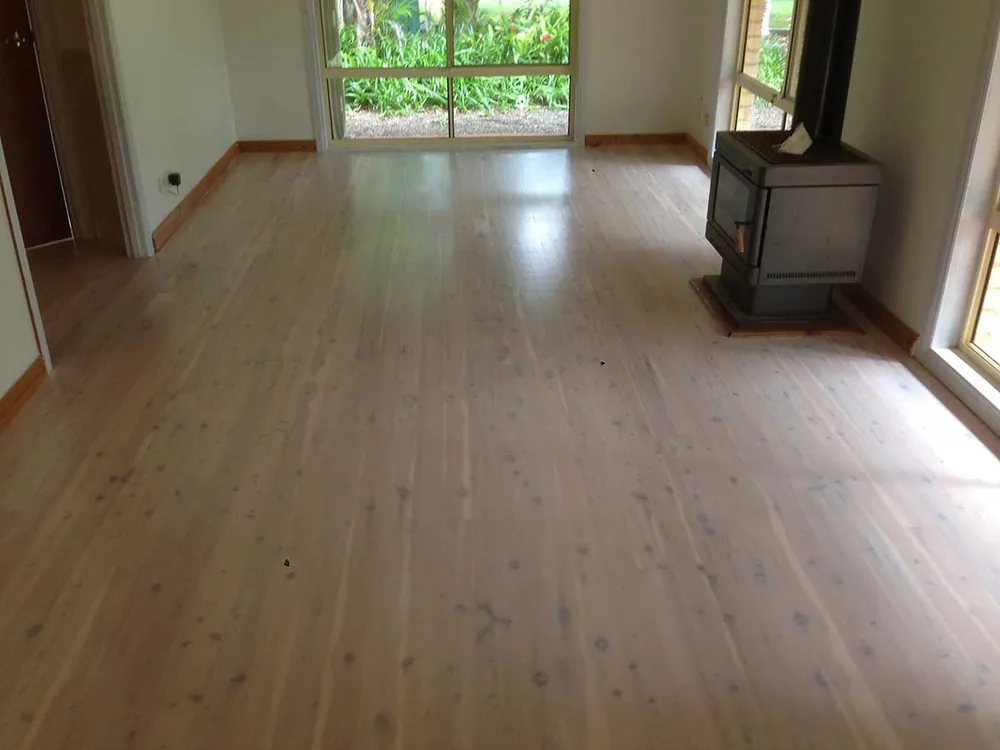
Cypress contains natural resins that can interfere with some coatings and cause slow drying or patchy adhesion, particularly around knots. We seal it with a compatible sealer chosen for resinous timber rather than assuming a standard system will bond.
This is a common cause of failed DIY cypress floors: the finish goes on fine, then stays tacky in patches around the knots for weeks.
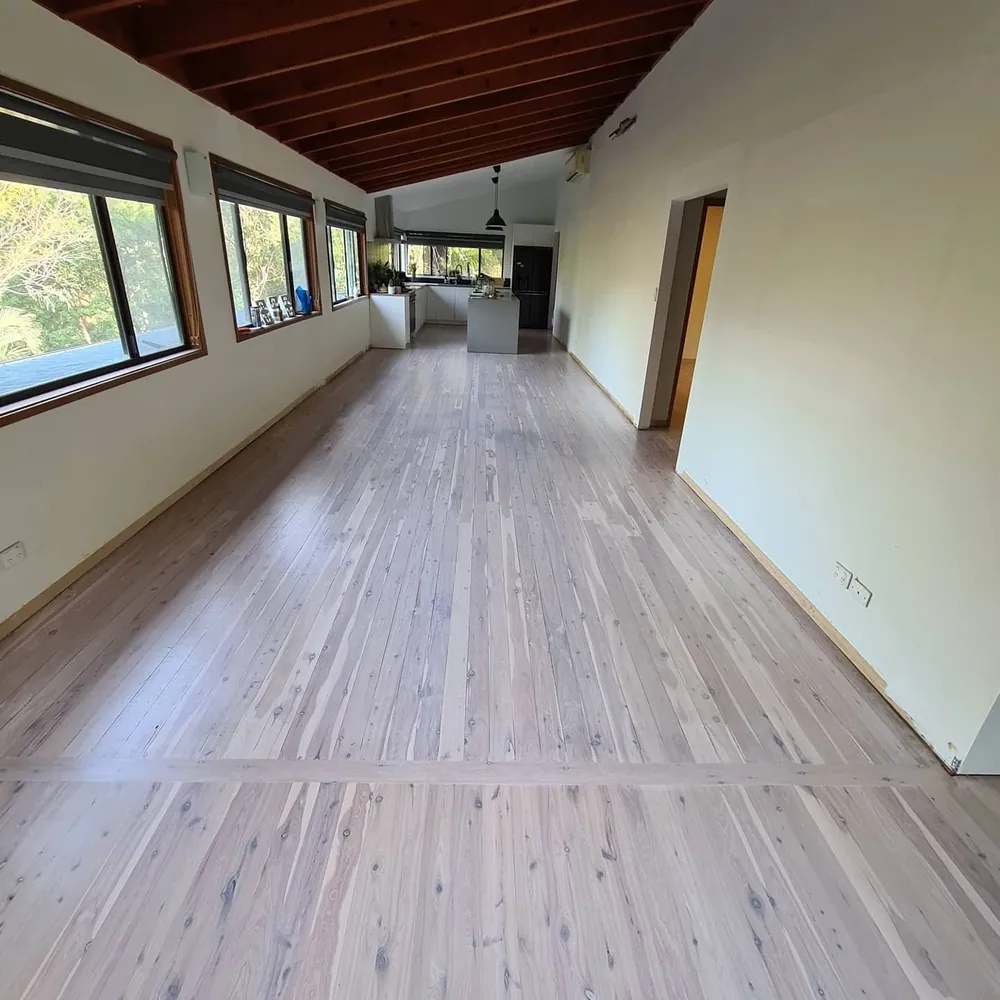
A matte finish suits cypress for a practical reason. Cypress is soft enough to collect small dents and scuffs, and a flat sheen shows that wear far less than satin or gloss because there is no reflection to pick it out. The honey tone and the dark knots read as texture rather than shine.
Sheen is chosen separately from the coating, so a matte look does not mean a weaker floor: within one coating system, matte, satin and gloss wear at essentially the same rate. What matters on cypress is the layer underneath, a sealer suited to resinous timber, so the topcoat bonds evenly around the knots. Over a limewash, a matte topcoat keeps the washed look soft and chalky, while satin gives it a little more depth. We can lay two sheens side by side on your floor before you decide.
A lot of the cypress we uncover on the Gold Coast has been under carpet since the seventies, complete with tack strips, staples and the original nail punches. The staples all come out, the nails get punched below the surface, gaps and splits get filled with a matched filler, and the floor comes back properly. It is one of the most satisfying jobs we do.
No, and they should not be. The knots are the character of a cypress floor. What we can do is choose a finish that plays them up or tones them down.
It will pick up more dents than a hardwood, which most owners come to see as patina. If you want a dent-free floor, cypress is not it.
Usually yes. Send us a photo of a corner lifted and we will tell you honestly what you are likely to find underneath.
Yes. Once the boards are sealed with a sealer that suits cypress resin, the topcoat can be matte, satin or gloss. Matte is a good match for a softer timber because it shows dents and scuffs the least.
That is what the free in-home estimate is for. We will look at your timber, show you samples on it, and tell you honestly what will work.
Tell us about your floor and we will get back to you fast, usually the same day, to book a free in-home look and an honest price.

Local timber floor sanding, polishing and restoration across 97 suburbs - from the Logan line and the hinterland to the NSW Northern Rivers. View all areas we service
 Fine FinishedFloors
Floors worth showing off - cut back, stained and finished by Gold Coast specialists since 2010.
22 Springsure Drive,
Mudgeeraba QLD 4213
Monday to Saturday, 7am to 5pm
Servicing the Gold Coast, Logan fringe and Northern NSW to Ocean Shores. Free, no-obligation in-home estimates.