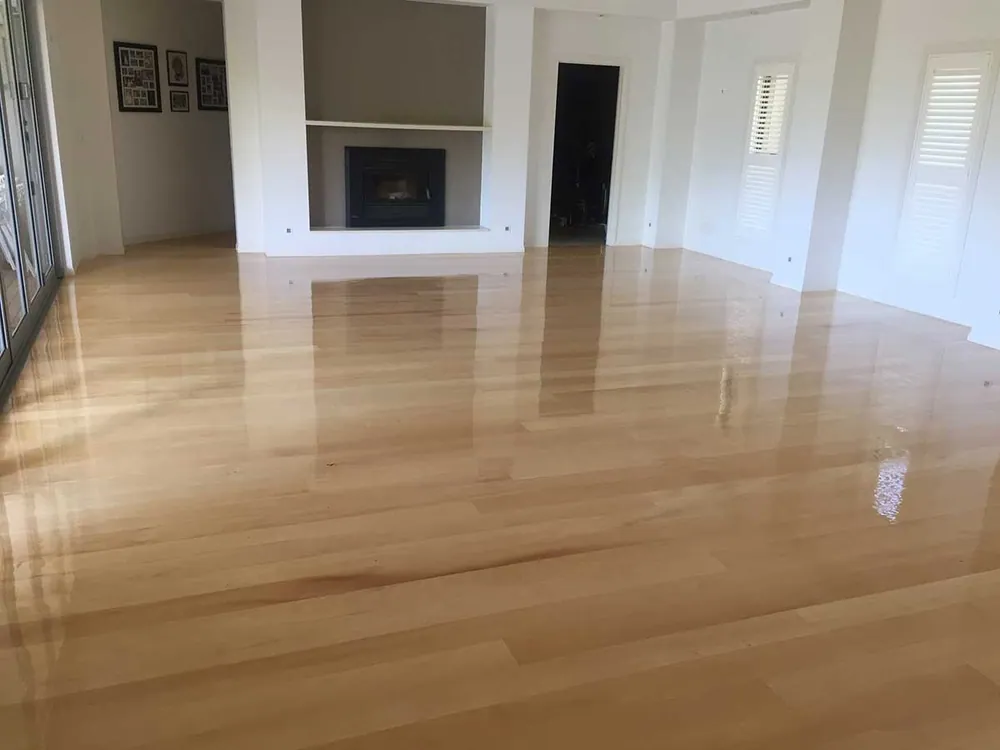
Baltic pine, hoop pine and radiata turn up in old cottages, Queenslanders and upstairs additions all over the Coast. They are soft, they mark, and with the right hand on the machine they come up beautifully.
Baltic pine came out of Europe as ballast and flooring in the nineteenth and early twentieth century: narrow boards, close growth rings, honey coloured, usually with plenty of nail holes. Hoop pine is the Queensland softwood, paler and finer with barely any figure. Radiata is the modern plantation timber, softer again, common in later additions.
Cypress pine is technically a softwood too but behaves differently enough that we treat it separately.
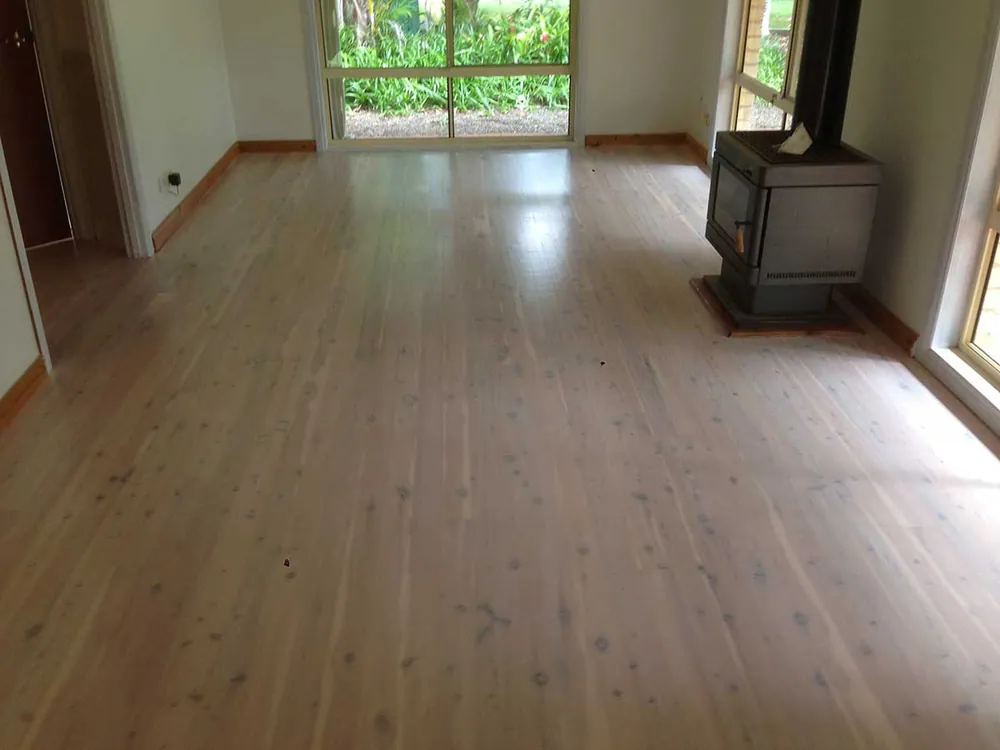
Softwood has hard latewood rings and soft earlywood between them. Push a drum sander too hard and it will cut the soft bands deeper than the hard ones, leaving a washboard surface you can feel underfoot and see in raking light. It is the single most common fault in DIY pine floors.
The answer is lighter passes, sharper abrasive, a full grit sequence and never dwelling in one spot. Old pine also nearly always needs its nails punched below the surface first, because a proud nail head will destroy a sheet of paper and score the floor as it goes.
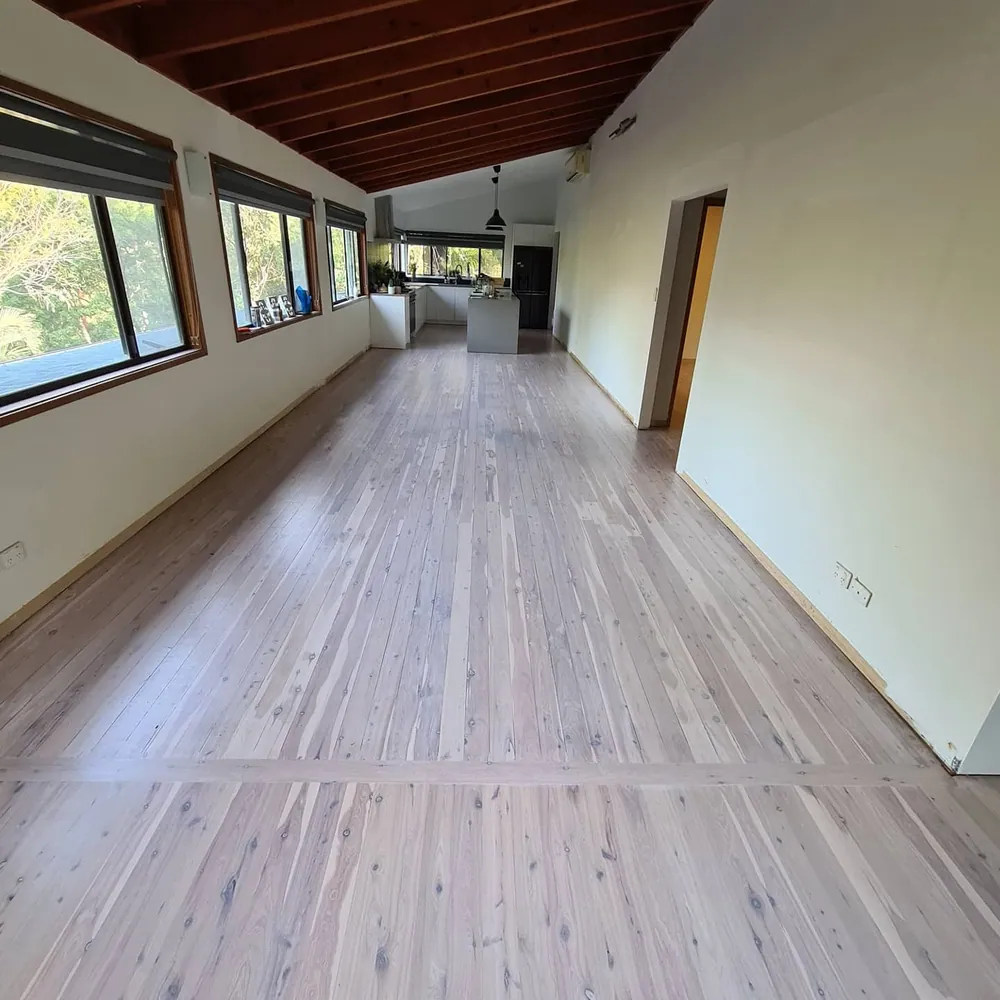
Century-old pine floors have gaps. Sometimes a lot of them. Fine gaps can be filled with a slurry of the floor's own sanding dust and a binder, which colour matches perfectly. Wider gaps are better filled with slivers of matching timber cut and glued in, which will not fall out when the boards move next summer.
We will always tell you which approach a floor needs. Slurry-filling a wide gap looks fine for six months and then cracks out.
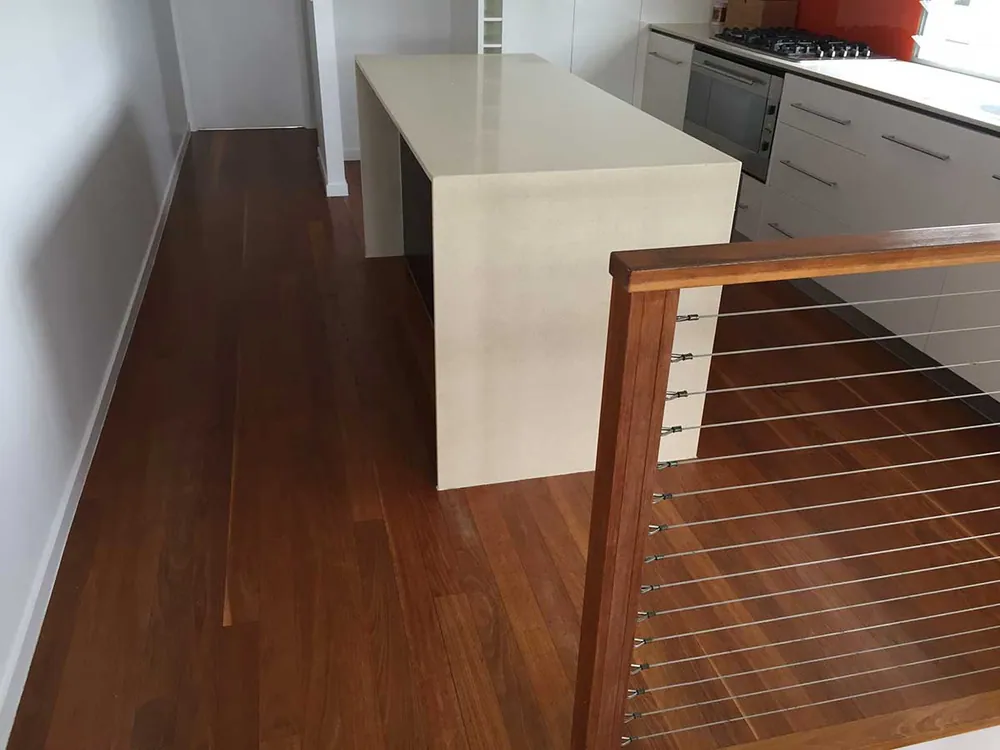
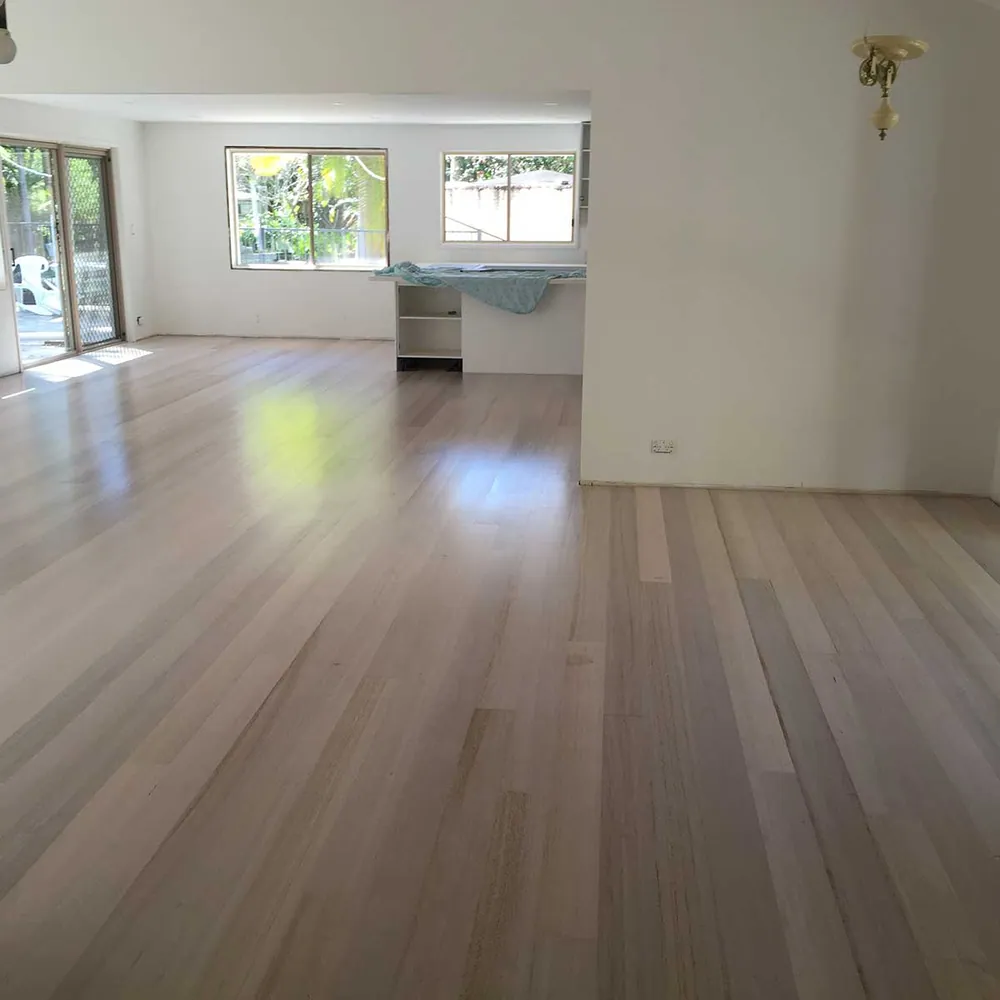
Pine yellows naturally with age and light, so a solvent polyurethane on top of that will take an old baltic floor quite orange. Most owners now go water-based to keep it honey rather than amber, or limewash it to cool it right down.
A satin sheen suits pine better than gloss: the surface of an old softwood floor is never dead flat, and gloss will show every wave.
Yes. Softwood floors mark, and in an old cottage that patina is usually part of the appeal. If you need a floor that resists dents, pine is the wrong timber.
Individual gaps can be filled well. Closing a floor up entirely means lifting and re-laying it, which is a much bigger job and rarely worth it.
Sanding removes the surface oxidation and takes it back several shades. A water-based finish then keeps it there, and a limewash will take it lighter again.
That is what the free in-home estimate is for. We will look at your timber, show you samples on it, and tell you honestly what will work.
Tell us about your floor and we will get back to you fast, usually the same day, to book a free in-home look and an honest price.
Local timber floor sanding, polishing and restoration across 97 suburbs - from the Logan line and the hinterland to the NSW Northern Rivers. View all areas we service
 Fine FinishedFloors
Floors worth showing off - cut back, stained and finished by Gold Coast specialists since 2010.
22 Springsure Drive,
Mudgeeraba QLD 4213
Monday to Saturday, 7am to 5pm
Servicing the Gold Coast, Logan fringe and Northern NSW to Ocean Shores. Free, no-obligation in-home estimates.