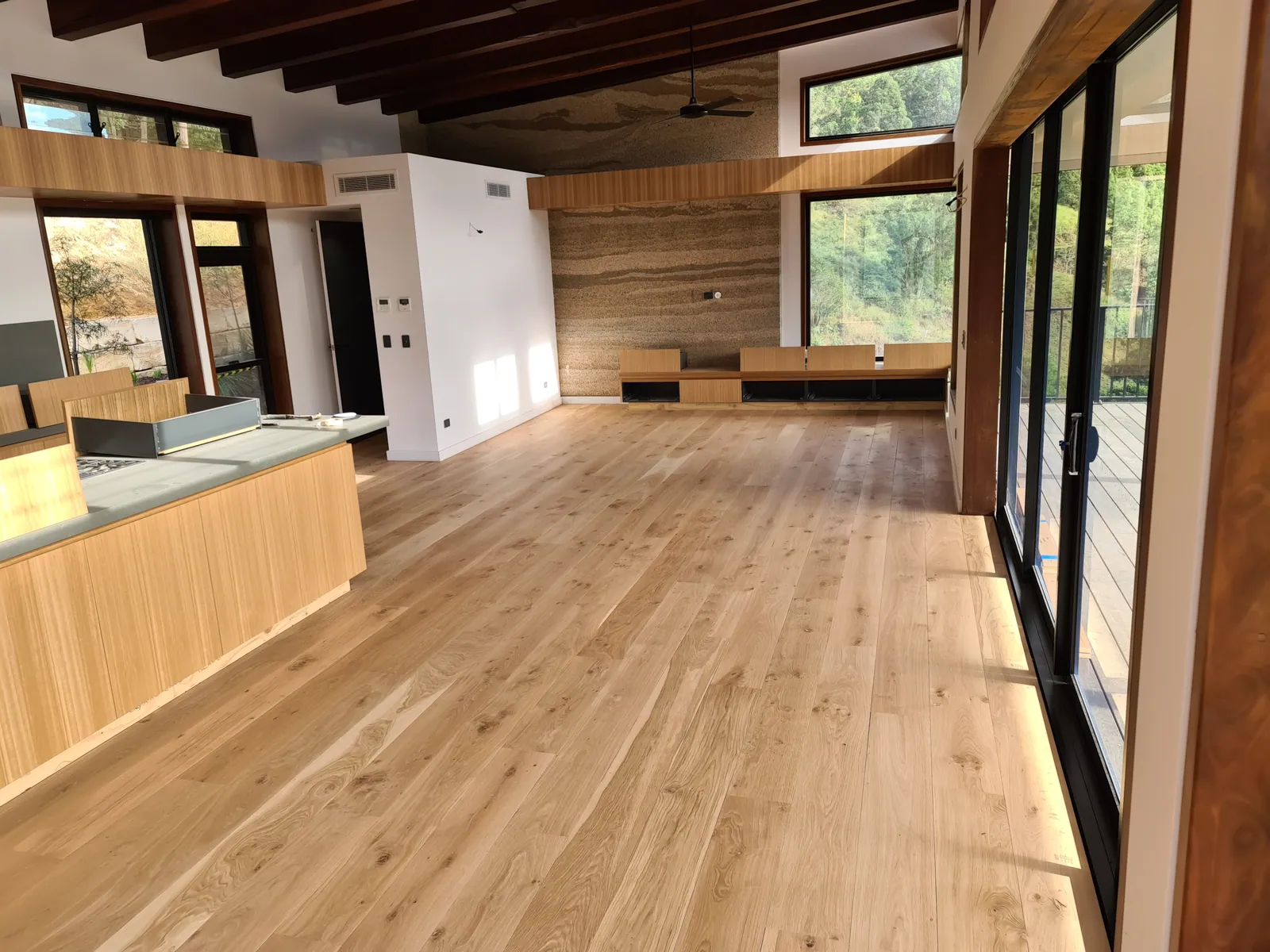
Warmer and more characterful than its American cousin, and the timber most often specified for a natural oiled floor. European oak is where knots, colour variation and visible history are the point rather than a fault.
European oak is usually sold by grade: prime or select is clean and uniform, rustic or character grade has knots, sapwood, colour variation and small fissures. Most of what goes down on the Gold Coast is character grade, because that is the look people are buying.
When we sand it, the knots and fissures stay. Filling them with a contrasting resin is a design choice some owners want; leaving them open is more common and more honest to the timber.
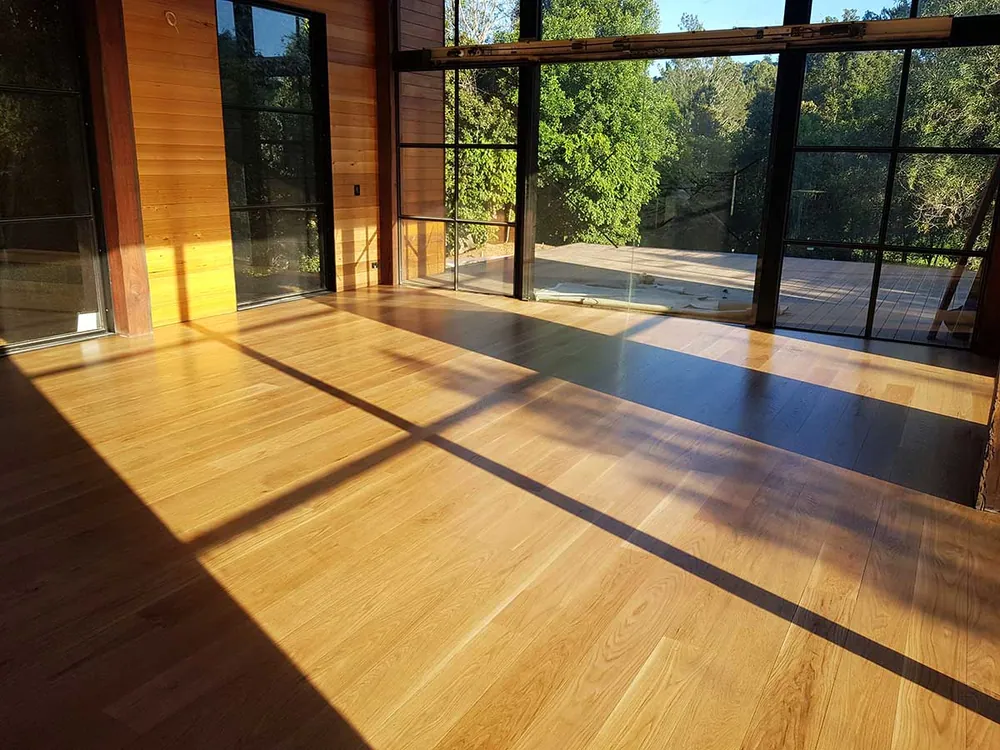
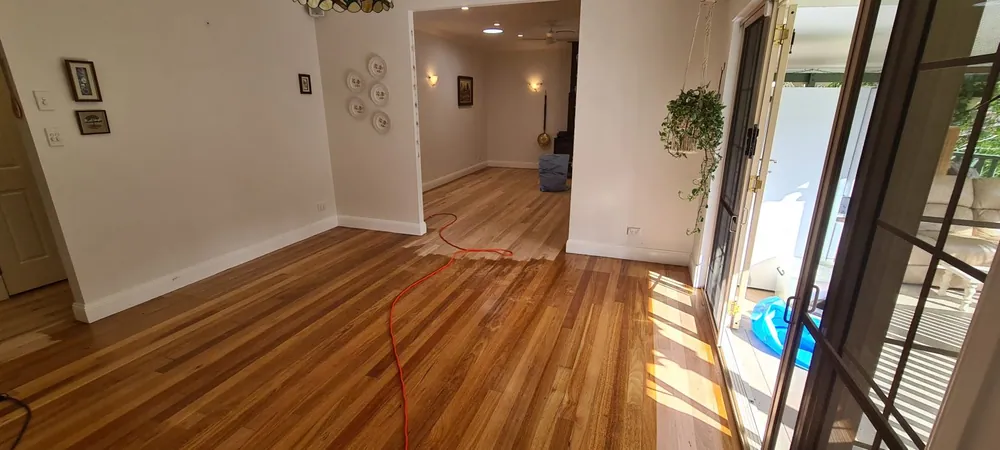
European oak and hard wax oil belong together. The oil deepens the natural warmth, leaves the surface matte and tactile, and lets the knots and grain stay part of the floor rather than being sealed under a film.
It also solves the practical problem with a character-grade floor: a film finish over an uneven, knotty surface will eventually crack or wear at the high points, and repairing it means the whole room. An oiled European oak floor can be spot repaired forever.
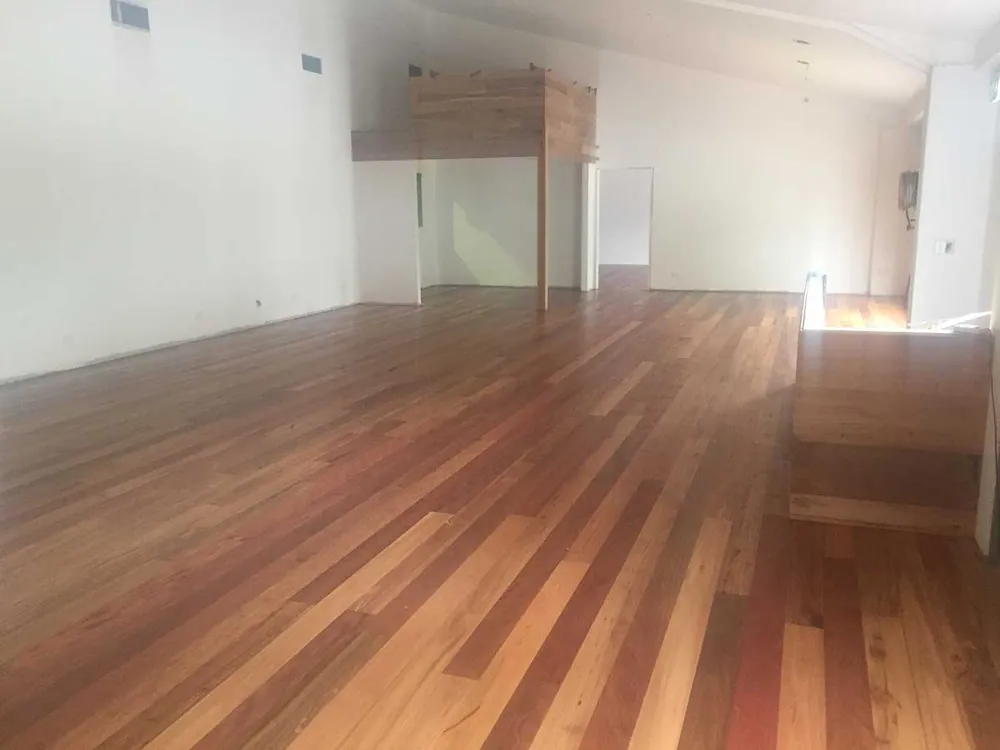
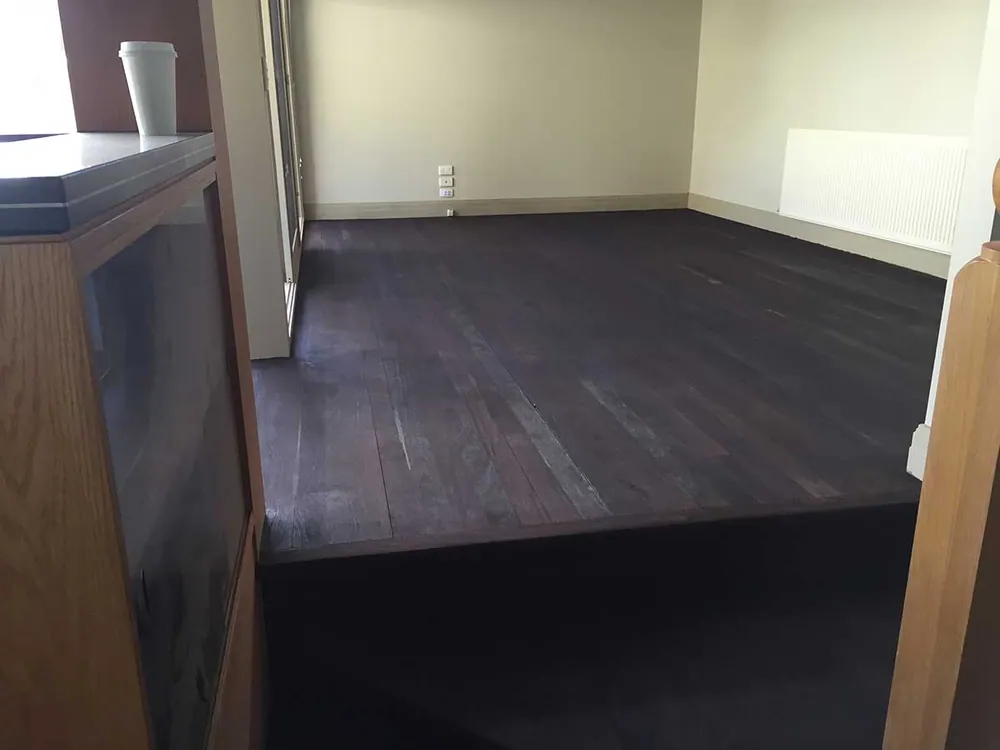
European oak is the base for most of the fashionable floor colours: smoked, fumed, greyed, white-oiled, natural. Its tannin content is what makes fuming work at all, and it is why an ammonia or reactive treatment turns oak a deep grey-brown when it would do nothing to a eucalypt.
Any of these are sampled on your own boards. Tannin content varies between batches and even between boards, and reactive colours are the least predictable of everything we do.
Most European oak sold here is engineered with a 3mm to 6mm wear layer. That is enough for one full sand and usually a light second. Because oiled floors can be maintained without sanding, an oiled engineered oak floor can be kept looking new for decades without ever spending that wear layer.
It is a preference. Open knots are the traditional look for character grade. Filling them with a dark or clear resin is a valid design choice, and we do both.
A reactive treatment that darkens the timber by reacting with the tannin in the oak rather than by sitting on it as a pigment. It only works on oak and similar high-tannin timbers.
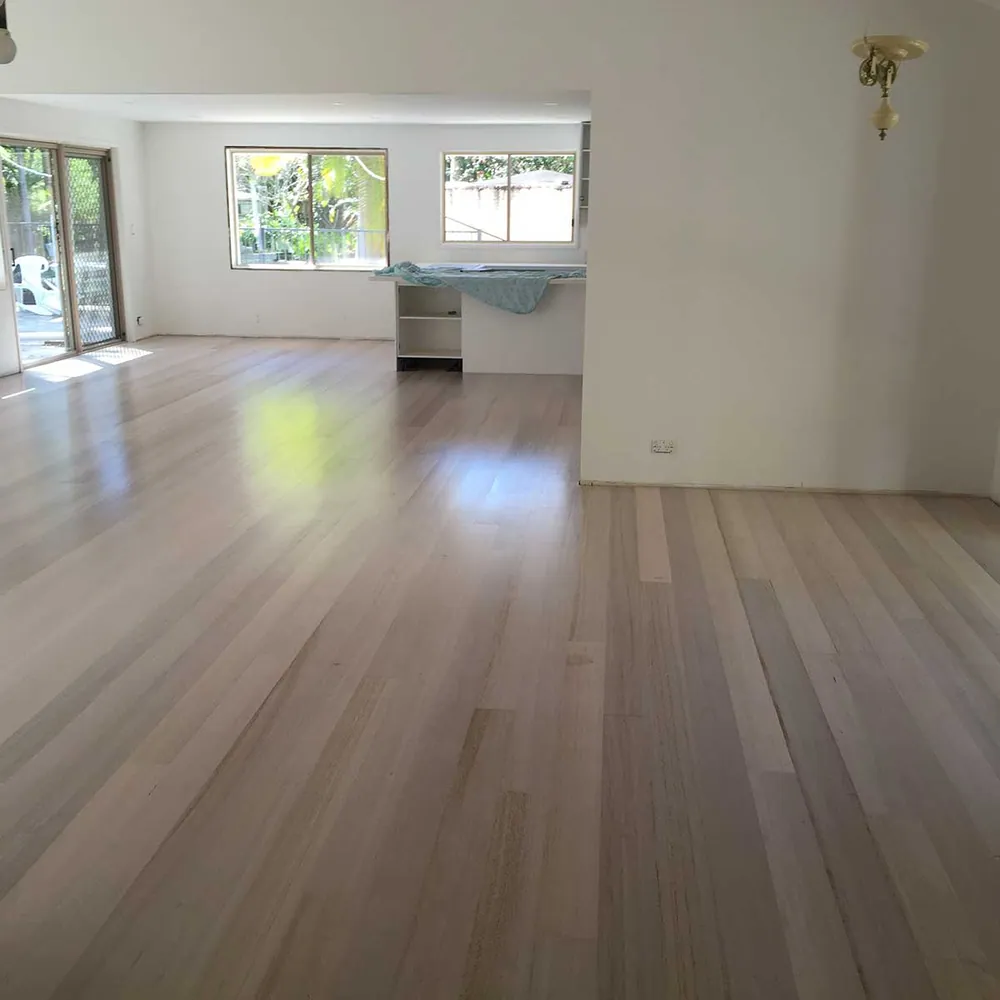
Yes, and it looks excellent, though it stays warmer than limewashed Tasmanian oak because the base timber is warmer.
That is what the free in-home estimate is for. We will look at your timber, show you samples on it, and tell you honestly what will work.
Tell us about your floor and we will get back to you fast, usually the same day, to book a free in-home look and an honest price.
Local timber floor sanding, polishing and restoration across 97 suburbs - from the Logan line and the hinterland to the NSW Northern Rivers. View all areas we service
 Fine FinishedFloors
Floors worth showing off - cut back, stained and finished by Gold Coast specialists since 2010.
22 Springsure Drive,
Mudgeeraba QLD 4213
Monday to Saturday, 7am to 5pm
Servicing the Gold Coast, Logan fringe and Northern NSW to Ocean Shores. Free, no-obligation in-home estimates.