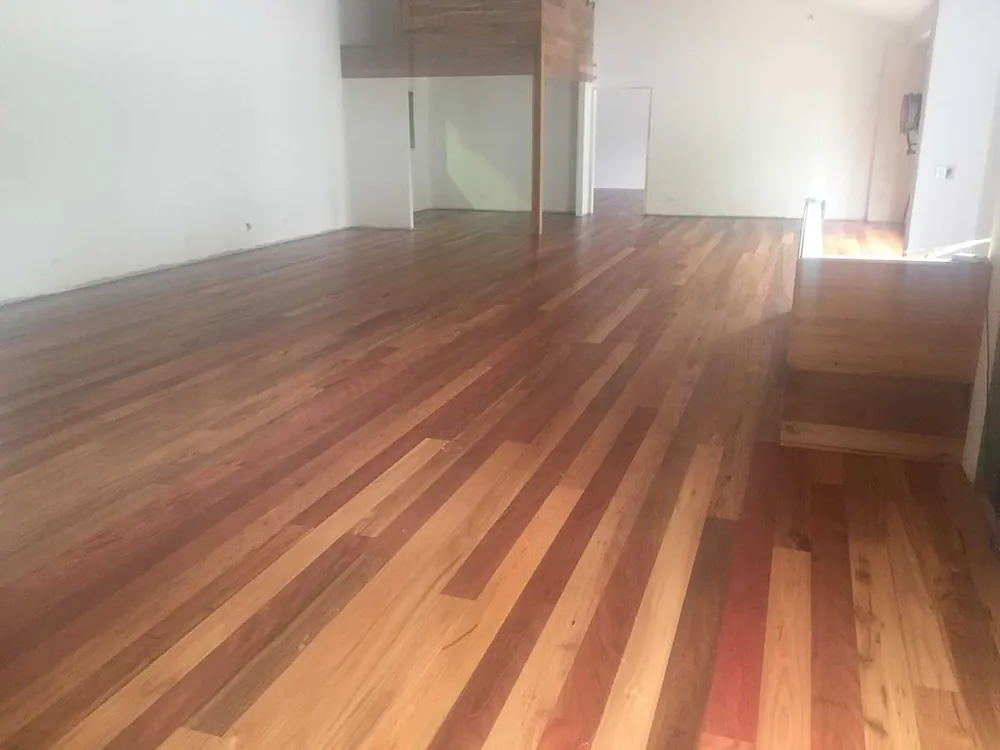
Oil driven into the timber under a burnishing pad, so the friction heat cures it in the grain rather than on the surface. The result is a low sheen floor with real depth and almost nothing sitting on top.
The oil goes down, then a machine works a burnishing pad across the boards. The friction generates heat, the heat opens the timber and thins the oil, and the oil is driven into the fibres instead of drying on the surface. Excess is buffed off. What is left is saturated timber with a soft, even sheen.
Because the finish is in the wood, there is no film to chip, craze or peel at a board edge. Wear shows up as the timber slowly drying out in the traffic lanes, which is fixed by re-oiling rather than resurfacing.
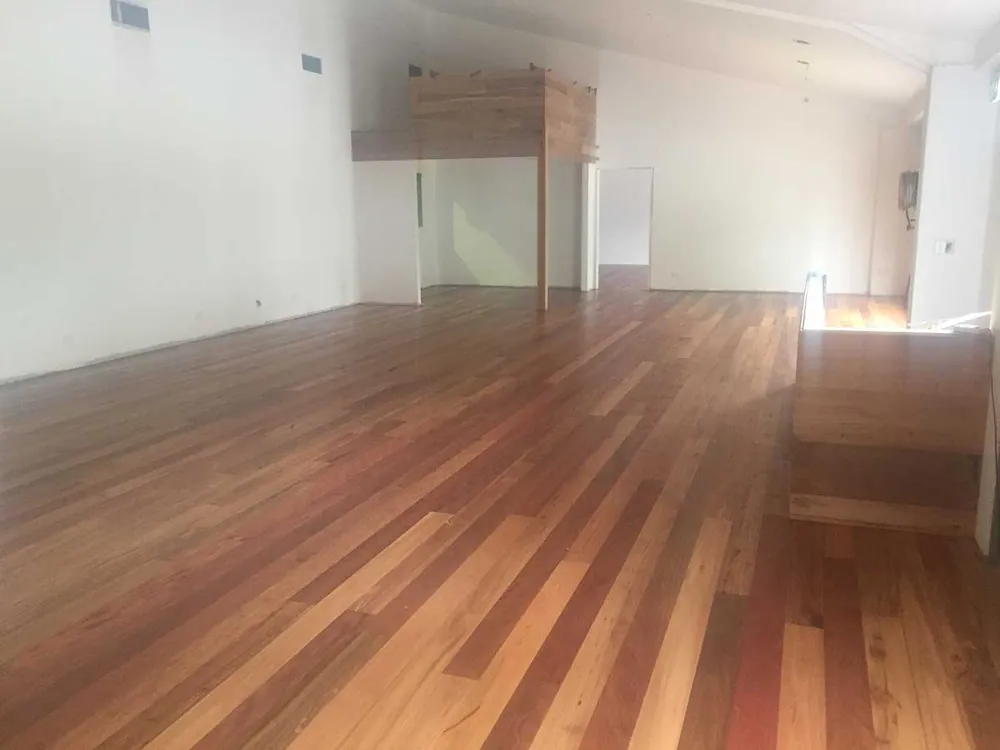
Coastal houses move. Humidity swings, boards expand and contract across the seasons, and a hard film finish can telegraph that movement as fine lines along the board joints. An oil that lives inside the timber flexes with it and hides that movement much better.
It also handles sand. In a beachside house the grit tracked in is the enemy of any finish, and a burnished oil floor that gets scuffed can be brought back in an afternoon instead of a week.
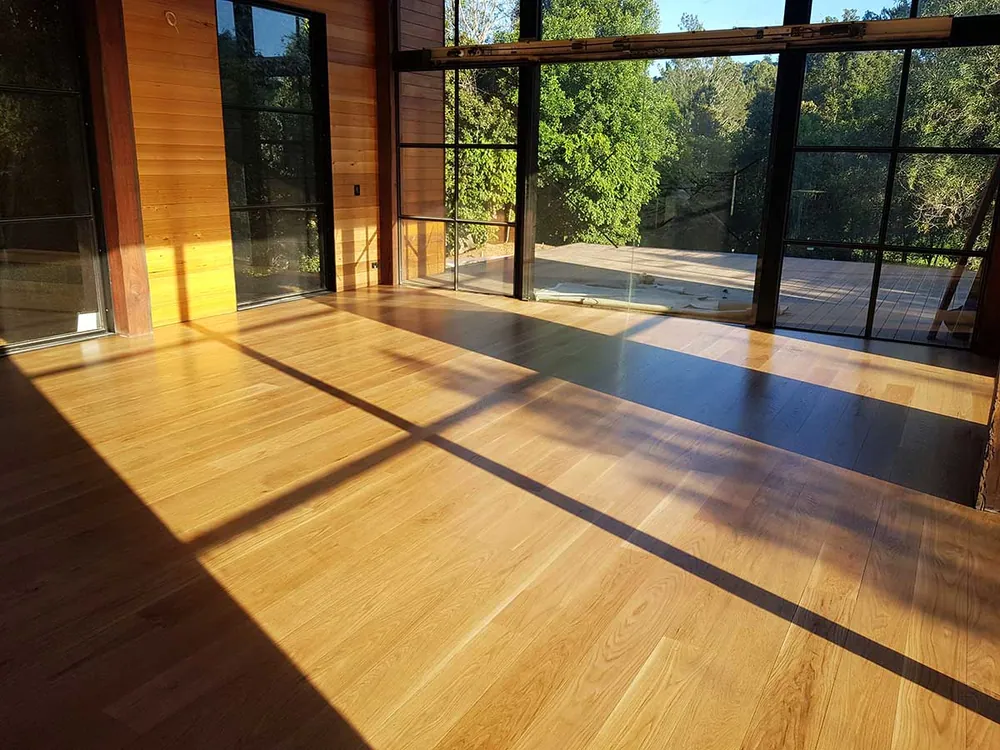
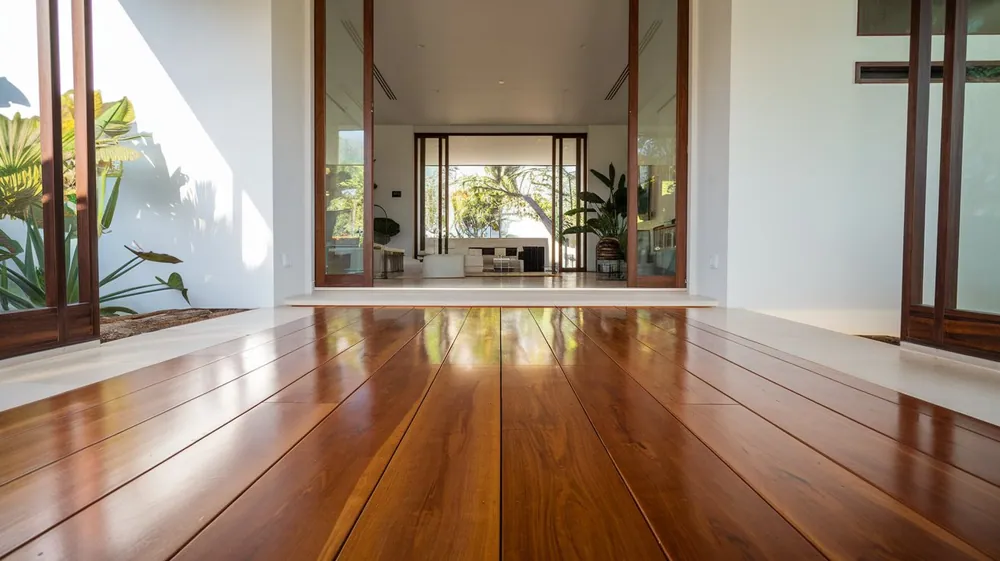
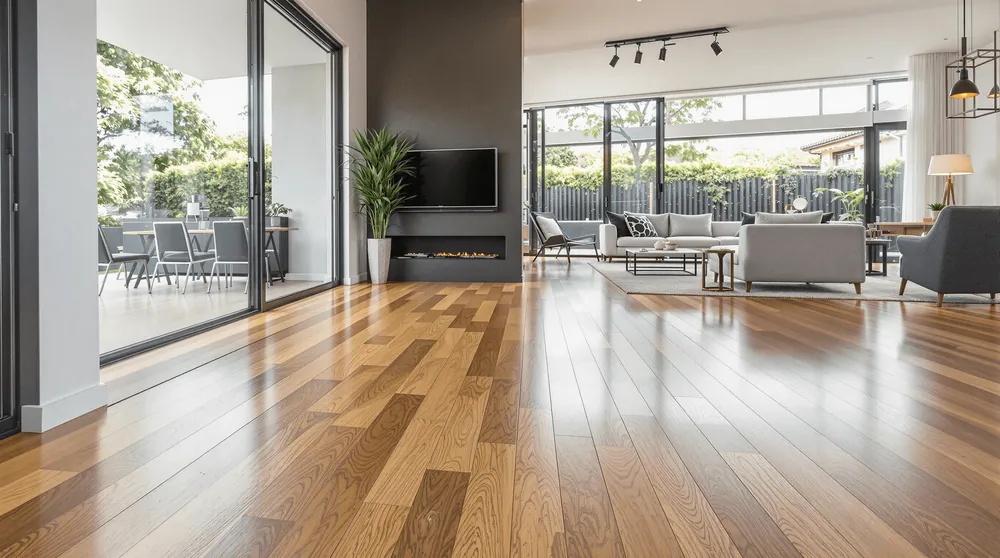
Flat to low satin, never shiny. Colours come up richer than they do under a clear water-based coat because the oil wets the grain permanently, the same effect you see when a bare board is damp. On spotted gum and blackbutt that depth is the whole reason people choose it.
It can also be tinted. A pigmented burnishing oil lets us shift the tone of the floor slightly, warm it up or cool it down, in the same pass that finishes it.
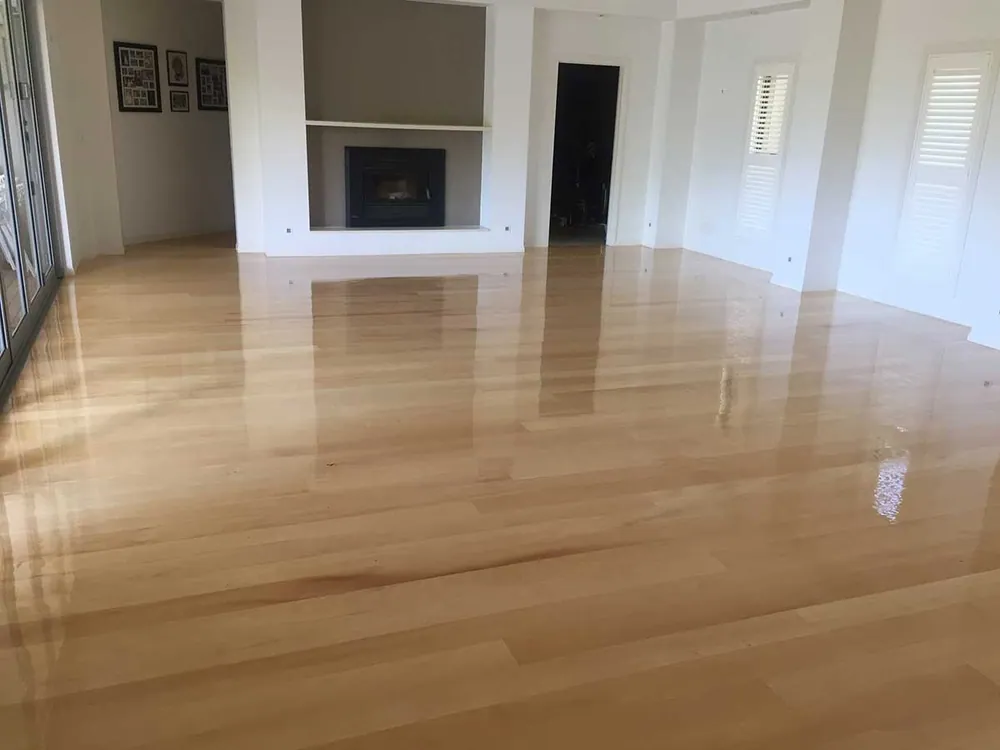
Sweep or vacuum regularly, damp mop with the matched cleaner, and put a maintenance oil over the walkways every year or so. That is the deal. It is less work than people expect but it is not zero, and skipping it for years is what makes oiled floors look tired.
They overlap. Hard wax oil is a product type; burnishing is a way of applying an oil so the heat drives it into the timber. Several hard wax oils are applied by burnishing.
It marks differently. A film finish resists the first scratch better but shows it forever. An oiled floor takes small marks more readily and lets us make them disappear.
Usually yes, if the old product is compatible and the floor is clean and free of silicone. We test a patch before we commit to it.
That is what the free in-home estimate is for. We will look at your timber, show you samples on it, and tell you honestly what will work.
Tell us about your floor and we will get back to you fast, usually the same day, to book a free in-home look and an honest price.
Local timber floor sanding, polishing and restoration across 97 suburbs - from the Logan line and the hinterland to the NSW Northern Rivers. View all areas we service
 Fine FinishedFloors
Floors worth showing off - cut back, stained and finished by Gold Coast specialists since 2010.
22 Springsure Drive,
Mudgeeraba QLD 4213
Monday to Saturday, 7am to 5pm
Servicing the Gold Coast, Logan fringe and Northern NSW to Ocean Shores. Free, no-obligation in-home estimates.